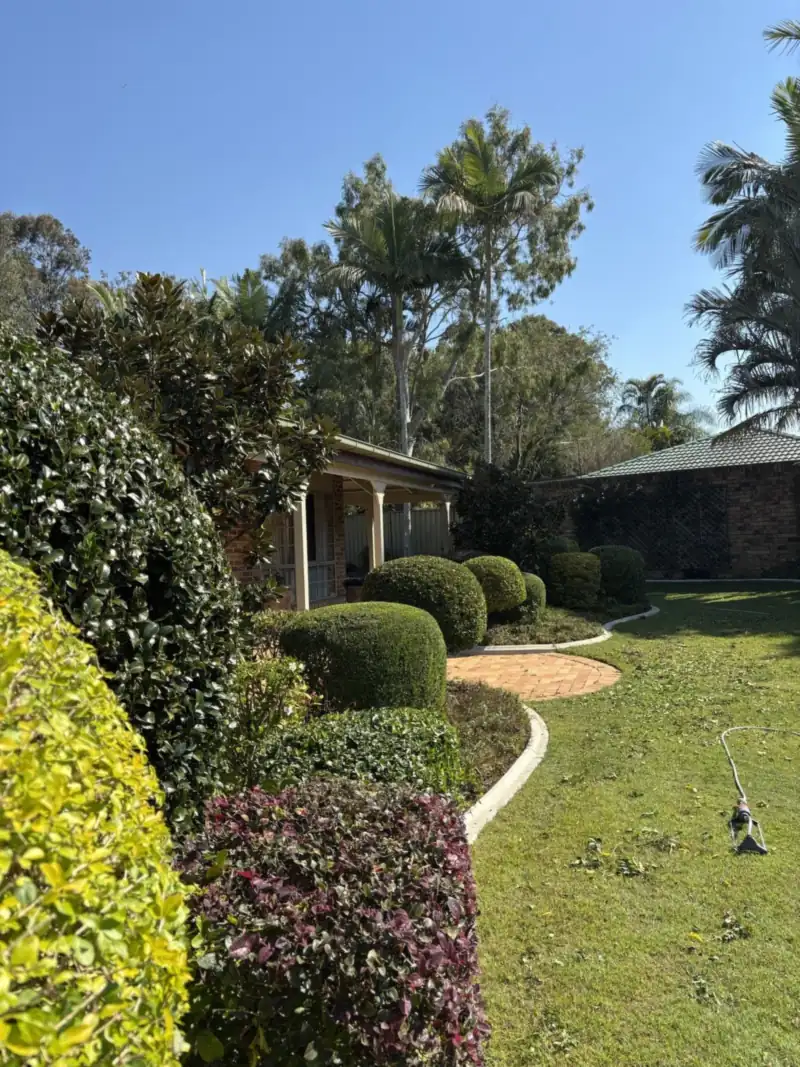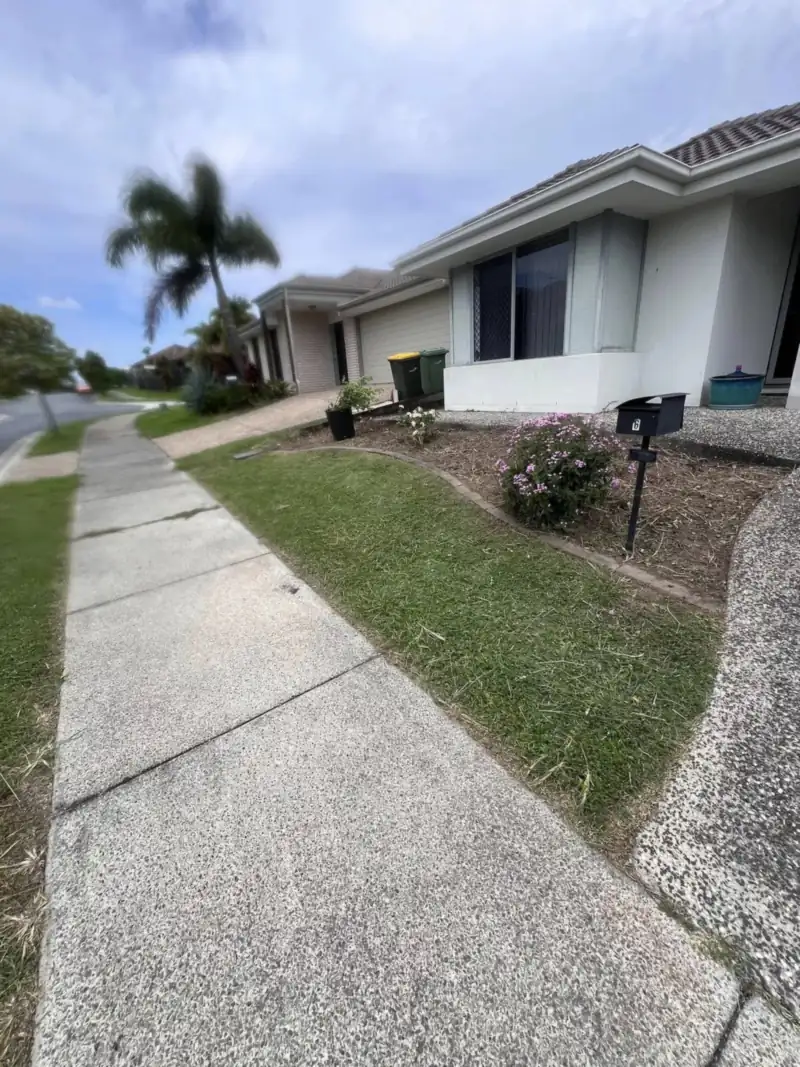

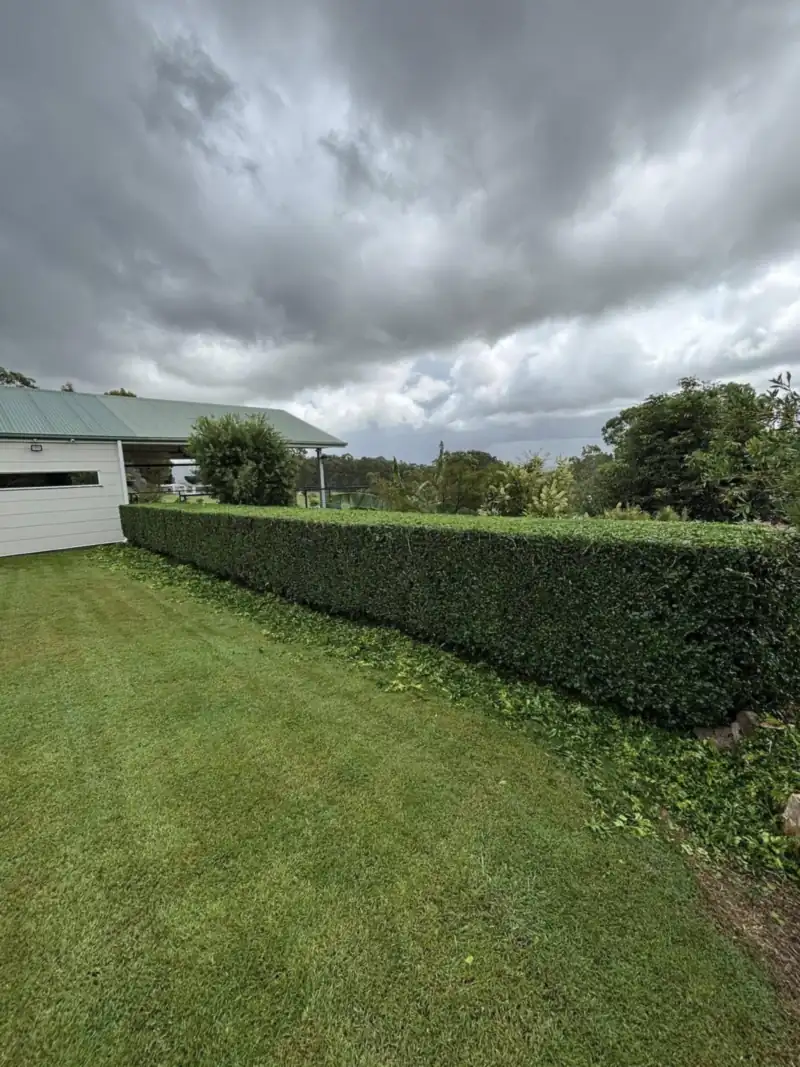
In South-East Queensland the best time to trim hedges is early spring, from late August to October, after the last cold snap and before the summer growth surge. Follow with light tidy-up cuts through summer and a final shaping trim in autumn, and avoid hard cuts during heatwaves or right before a frost.
When should you trim hedges through the year in Moreton Bay?
Warm-season hedging plants in Moreton Bay grow in flushes: a big one in spring, steady growth through the wet summer, a smaller flush in autumn, and very little between June and August. Trimming works with those flushes rather than against them.
| Period | What to do | Why |
|---|---|---|
| Late August – October | Main shaping cut, any height reduction | Plant is about to push hard; cuts heal fast and fill in within weeks. |
| November – February | Light tidy cuts every 6–8 weeks | Keeps lines crisp without stripping leaf in the heat. |
| March – April | Final shaping trim | Sets the hedge up to look neat through the slow winter months. |
| May – July | Leave it alone (except dead wood) | Growth is minimal; cuts stay visible and frost can burn fresh growth in Somerset valleys. |
Two or three cuts a year is the norm for a formal hedge in Caboolture or North Lakes. Fast growers like lilly pilly and murraya on a boundary screen may need a fourth in a wet year.
When should you trim hedges of each common Moreton Bay species?
Lilly pilly (Syzygium, Acmena)
The most planted screen in South-East Queensland. Trim after each flush of pink new growth hardens off, typically September, December and March. If you trim hedges mid-flush you waste the plant's energy and encourage psyllid damage on the soft tips.
Murraya (orange jessamine)
Trim hedges of murraya straight after flowering finishes so you do not lose the next lot of flowers. In Moreton Bay that usually means late spring and again in late summer. Murraya tolerates hard cutting well and reshoots from old wood.
Photinia and viburnum
Both are grown for the coloured new growth, so trim hedges of either to trigger a flush: early spring and mid-summer. Avoid cutting in late autumn or the fresh red tips can be frost-damaged in Kilcoy, Esk and Toogoolawah.
Duranta and bougainvillea
Trim hedges of both after flowering, and do not be shy: they are vigorous. A late winter cut back sets them up for the season. Wear gloves for bougainvillea and expect to remove thorny prunings, which is one reason clients hand this one to us.
Natives: westringia, callistemon, grevillea, syzygium 'Resilience'
Light, frequent tipping after flowering is the rule. Most natives do not reshoot from bare old wood, so never cut back into it. Westringia, in particular, wants a tip-prune every eight weeks in the growing season rather than one hard cut a year.
Conifers
Once a year in early spring, and only into green growth. Cut a conifer back to brown wood and it stays brown. If a conifer hedge has got too big, the honest answer is often a replacement rather than a reduction.
When should you not trim hedges?
- During a heatwave. Removing leaf in 35-degree heat exposes inner branches to sunburn and stresses the plant. Wait for a cooler week.
- Right before a frost. In the Somerset valleys, fresh cuts and soft new growth in June or July can be burnt. Finish the autumn trim by mid-April.
- In the middle of a growth flush. You will be cutting again in three weeks and you have wasted the flush.
- When birds are nesting. Check dense hedges in spring before starting; give an active nest a few weeks.
- When the hedge is drought-stressed. Water it well for a fortnight first, then cut.
How do you trim hedges so they stay thick to the ground?
Timing is half of it; technique is the other half. Whether you are doing it yourself or checking someone else's work, these are the fundamentals we apply on every job from Redcliffe to Woodford:
- Cut the faces slightly wider at the base than the top. A gentle batter lets light reach the lower leaves, which is the only thing that keeps a hedge full at the bottom. Hedges that are cut dead vertical, or wider at the top, always go bare at the base within a few years.
- Do the sides first, then the top. Use a string line for the top on anything longer than a couple of metres; eyes lie, especially on sloping ground.
- Use sharp blades. Torn leaves brown at the edges and invite disease. Sharpen or replace blades before each season.
- Take little and often rather than a lot at once. Trim hedges three times a year with light cuts and they look better every day of the year than one hacked back annually.
- Clean up completely. Clippings left in the base of a hedge hold moisture against the stems and hide the growth of weeds. Rake them out and remove them.
Reducing an overgrown hedge: take it down in stages across a season, never more than a third at once, and only on species that reshoot from old wood (lilly pilly, murraya, photinia, viburnum, duranta). Conifers and most natives will not recover from a hard cut.
When is it worth paying a professional to trim hedges?
Anything over head height, anything on a boundary you cannot reach from your own side, anything long enough to need a string line, and anything you have been putting off for a year. A professional cut with the right timing costs less over a season than replacing a hedge that was cut at the wrong time. Our hedge trimming service covers formal shaping, staged height reduction and screen pruning across Moreton Bay and Somerset, with every clipping removed.
Key takeaways
- Trim hedges in early spring for the main cut, lightly through summer, and once more in autumn.
- Do not trim hedges in a heatwave, right before frost, mid-flush or while birds are nesting.
- Cut the base wider than the top so light keeps the hedge full to the ground.
Frequently asked questions
How many times a year should hedges be trimmed in Queensland?
Trim hedges two to three times a year in South-East Queensland: a main shaping cut in early spring, a light tidy in mid-summer and a final trim in autumn. Fast-growing screens such as lilly pilly and murraya may need a fourth light cut in a wet year, while conifers need only one cut in spring.
Can you trim hedges in summer in Queensland?
Yes, with light cuts only. Summer trims keep lines crisp on lilly pilly, murraya and photinia, but avoid cutting during heatwaves above about 33 degrees, because exposed inner leaves sunburn and the plant is already under stress. Trim in the morning, water well afterwards, and save any hard reduction for early spring.
Is it too late to trim hedges in autumn?
No. A final shaping trim in March or April is ideal in Moreton Bay; it tidies the hedge for the slow winter months. Finish by mid-April in the Somerset region so fresh growth hardens before frost. Avoid heavy cuts from May to July, when growth is minimal and cuts stay visible for months.
What month is best to cut back a lilly pilly hedge?
September is the best month for a main cut on a lilly pilly hedge in South-East Queensland, just as spring growth begins. Trim hedges again lightly in December and March after each flush of new growth has hardened off. Cutting during a flush of soft pink growth wastes the plant's energy and invites psyllid damage.
Do you remove the clippings when you trim hedges?
Yes. Every time we trim hedges across Moreton Bay and Somerset the visit includes raking clippings from garden beds and lawn, blowing down paths and removing all green waste. Clippings left in the base of a hedge trap moisture against the stems and hide weeds, so we never leave them behind.
Book someone to trim hedges before the growth surge
Send a photo of the hedge with the quote form and Green Estates Gardening will give you a fixed price for shaping, reduction or a seasonal trimming schedule across Moreton Bay and Somerset.
About Green Estates Gardening
Green Estates Gardening Pty Ltd is an owner-operated lawn and garden business based in Wamuran, Queensland, run by Hamish Baggley with more than 13 years of hands-on experience. We provide lawn mowing, acreage and ride-on mowing, hedge trimming, garden cleanups and weed control and mulching and minor tree work across the Moreton Bay and Somerset regions, including Caboolture, Morayfield, Burpengary, Narangba, North Lakes, Redcliffe, Woodford, D'Aguilar, Kilcoy and Esk. Call 0439 550 850 for a fixed-price quote.