

You can mow wet grass, but it is usually a bad idea: wet blades bend instead of cutting cleanly, clippings clump and smother the lawn, the mower can slip and tear turf, and disease spreads in the damp. If you have to mow wet grass, do it only when it is lightly wet, the ground is firm, the blade is sharp and the deck is raised.
Why is it a problem to mow wet grass?
Dry grass stands up and gets sliced cleanly. Wet grass lies down under the weight of the water, so the blade tears and bruises it instead. The result is a ragged, uneven cut that browns off within a day and leaves the lawn looking worse than before you started. That is the cosmetic problem. The practical ones are worse:
- Clumping. Wet clippings stick together and to the underside of the deck. They drop in mats that smother the grass beneath and turn into slimy thatch in a Queensland summer.
- Rutting and tearing. Soft ground under a ride-on or even a push mower leaves wheel ruts, and on slopes the wheels spin and rip turf out by the roots.
- Disease. Fungal problems like brown patch and dollar spot spread on wet leaf tissue. A mower moving across a wet lawn carries spores from one patch to the next.
- Soil compaction. Saturated soil compresses under the machine, which is the opposite of what a lawn needs after weeks of rain.
- Safety and the machine. Wet grass is slippery, electric mowers and water do not mix, and the extra load on the engine blunts blades and clogs the deck.
Every one of those is a reason not to mow wet grass if you can wait a day.
When is it okay to mow wet grass, or at least damp grass?
There is a difference between wet and damp. Morning dew, a light shower an hour ago, or humidity that never quite lets the lawn dry are all realities of Moreton Bay from November to March. Waiting for a bone-dry lawn can mean waiting until May. Mowing damp grass is acceptable when all of these are true:
- The ground is firm underfoot and does not squelch or leave footprints.
- Water does not bead on the leaf when you run your hand across it.
- The mower blade is sharp. A sharp blade cuts damp grass; a blunt one tears it.
- You raise the deck at least one notch above your usual height.
- You slow down, overlap passes, and empty the catcher more often.
The squelch test: walk the wettest part of the lawn. If your shoe sinks or water rises around it, do not put a mower on it today. If it is merely soft and springy, you can mow wet grass with a light, high cut.
How do you mow wet grass properly if you have to?
Sometimes there is no choice: a tenant is moving out on Friday, a house is being photographed on Saturday, or the kikuyu on an acreage block in Wamuran is so far ahead that another week of rain will make it unmowable. When we have to mow wet grass after rain, this is the method:
- Wait for the middle of the day. Even two hours of sun and breeze after a shower dries the leaf enough to make a real difference.
- Sharpen the blade first. Non-negotiable. It is the single biggest factor in cut quality on damp grass.
- Raise the cutting height. Take the top off now and come back for the proper cut when it dries.
- Cut in half-width passes. Overlapping by half the deck reduces clogging and leaves fewer clumps.
- Catch rather than mulch. When you mow wet grass the clippings do not spread evenly. Bag them, or rake and blow the clumps off afterwards.
- Stay off the slopes and dam banks. On acreage around Kilcoy, Esk and Toogoolawah the banks can wait a few days; the flat paddock cannot.
- Clean the deck afterwards. Grass packed under the deck after you mow wet grass rusts steel and throws the blade off balance.
How do professionals keep lawns under control in a Moreton Bay wet season?
The trick is not to mow wet grass in the rain. It is to never be more than one cut behind when the rain comes. Through summer our regular rounds in Caboolture, Morayfield, Burpengary and North Lakes run fortnightly or weekly, so a lawn that misses a visit because of a week of storms is only a few days overdue, not a month. That is a light, high cut on the first dry morning rather than a knockdown.
We also move the round around the weather. Acreage and open paddocks that dry quickly are mowed first after rain; shaded suburban back yards that hold moisture are mowed last. If we would have to mow wet grass that squelches underfoot, the job is rescheduled rather than done badly. Our clients would rather have a two-day delay than ruts across the front lawn.
What should you do with a lawn after weeks of rain?
Once it dries out, a lawn that has been through a wet fortnight usually needs three things. First, a staged cut: high, then normal, a few days apart; resist the urge to mow wet grass twice in a week to catch up. Second, a check for fungal disease, which shows as circular brown or straw-coloured patches; it often clears once airflow improves and the lawn is cut, but persistent patches may need a fungicide. Third, a light feed once growth resumes, because heavy rain leaches nitrogen out of sandy coastal soils around Redcliffe and Bribie faster than the clay soils inland.
If weeds have exploded in the wet, that is a separate job. Our guide to getting rid of weeds in a Queensland lawn covers bindii, nutgrass and clover, and our weed control service handles it for you.
Key takeaways
- You can mow wet grass, but you usually shouldn't: torn leaf, clumping, rutting and disease are the price.
- Damp is different from wet: firm ground, a sharp blade and a raised deck make a light cut acceptable.
Frequently asked questions
Is it bad to mow the lawn when it is wet?
It is usually bad to mow wet grass: you get a torn, uneven cut, leaves clumps of clippings that smother the lawn, can rut soft ground and spreads fungal disease. If the ground is firm and the grass is only damp rather than soaked, a slow, high cut with a sharp blade is acceptable. If the soil squelches, wait.
How long after rain can you mow the lawn?
In Moreton Bay's summer heat a lawn is often mowable four to six hours after a shower and by the next morning after heavy overnight rain, provided the ground is firm. Shaded, clay or low-lying lawns can take two or three days. Test the soil with your foot rather than the calendar.
Can you mow wet grass with a ride-on mower?
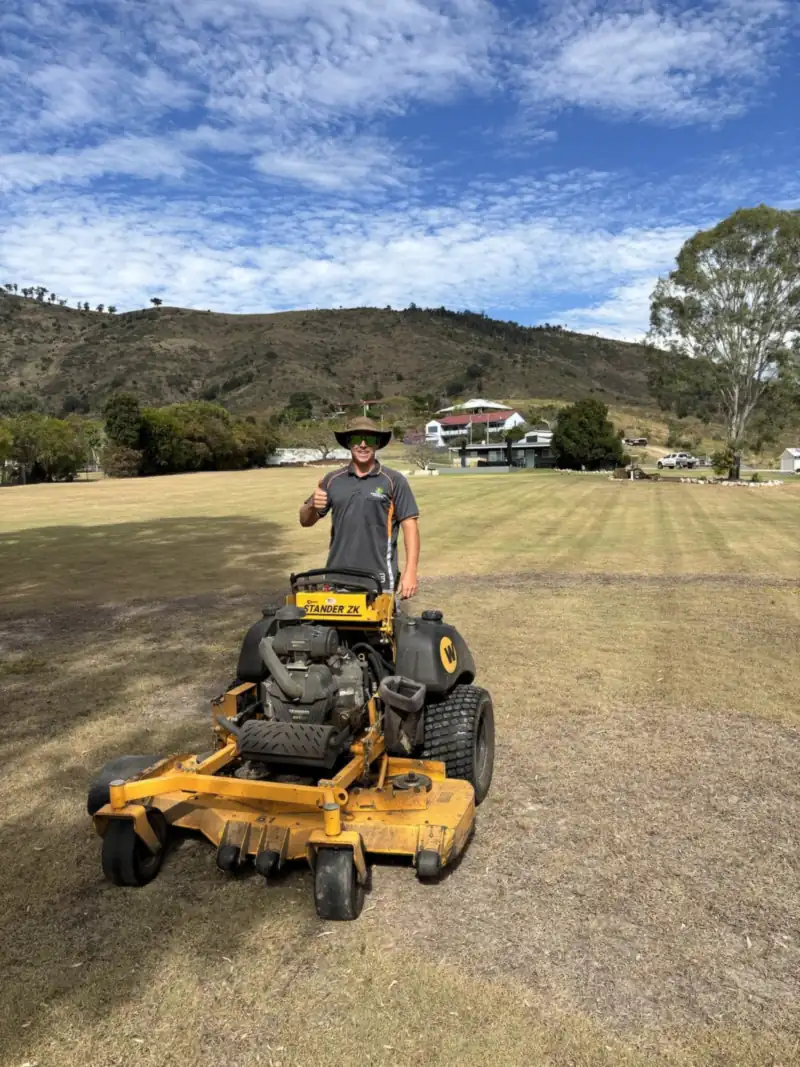
A ride-on is heavier than a push mower, so it ruts and compacts wet ground more easily and can slide on damp slopes. On open, firm acreage a high cut is usually fine once surface water has gone. Avoid dam banks, gullies and anything steep until they dry, and clean packed grass out of the deck afterwards.
Why does my lawn go brown after mowing in the wet?
Because you chose to mow wet grass and the wet leaf was torn rather than cut, and the damaged tips dry out and brown within a day. A blunt blade makes it much worse. It is cosmetic and grows out with the next cut, but repeated wet mowing weakens the lawn and invites disease. Sharpen the blade and raise the deck before mowing damp grass.
Do you still mow in wet weather in Moreton Bay?
Green Estates Gardening will mow wet grass that is merely damp when the ground is firm, and reschedules when it is not. Because our regular rounds across Caboolture, Morayfield, North Lakes, Wamuran and the Somerset region are fortnightly or weekly through summer, a rained-out visit only puts a lawn a few days behind rather than weeks.
Never more than one cut behind
A regular Green Estates mowing round through storm season keeps Moreton Bay and Somerset lawns short enough that nobody has to mow wet grass in a hurry: a wet week is a delay, not a disaster. Fixed price per visit, rescheduled around the weather.
About Green Estates Gardening
Green Estates Gardening Pty Ltd is an owner-operated lawn and garden business based in Wamuran, Queensland, run by Hamish Baggley with more than 13 years of hands-on experience. We provide lawn mowing, acreage and ride-on mowing, hedge trimming, garden cleanups and weed control and mulching and minor tree work across the Moreton Bay and Somerset regions, including Caboolture, Morayfield, Burpengary, Narangba, North Lakes, Redcliffe, Woodford, D'Aguilar, Kilcoy and Esk. Call 0439 550 850 for a fixed-price quote.