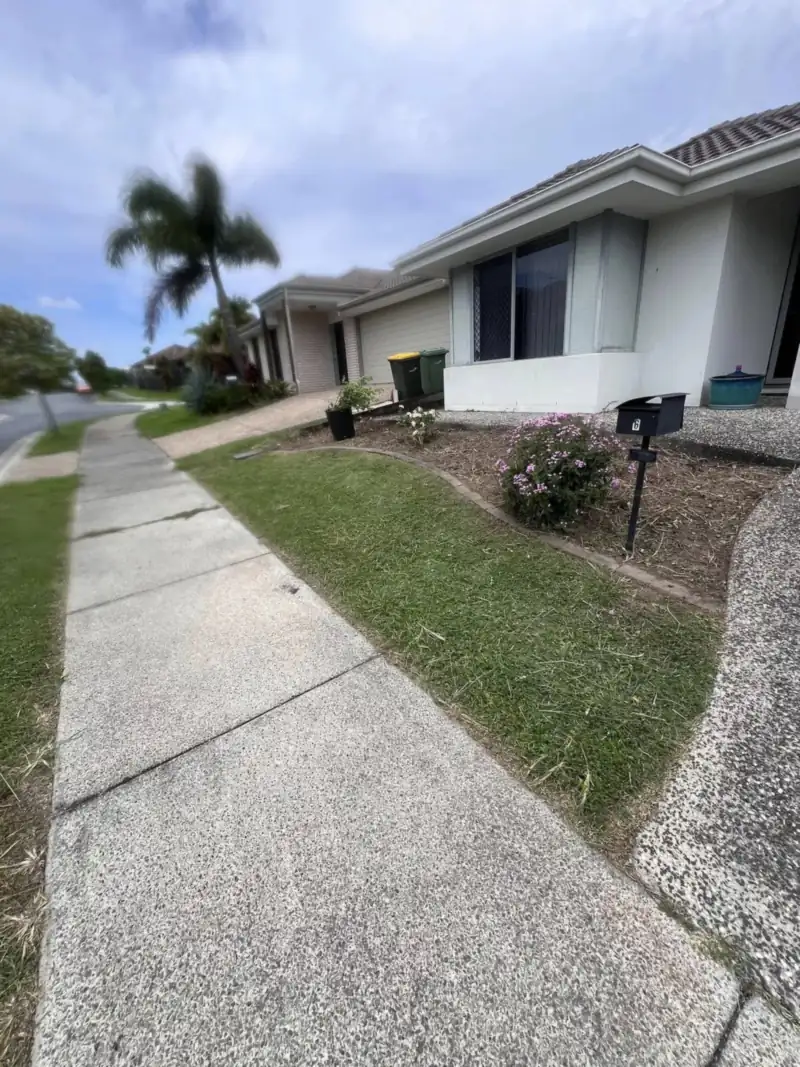


When to mulch a garden in Queensland: late winter to early spring, from August to October, with a top-up in autumn. Lay organic mulch 50 to 75 millimetres deep, keep it clear of stems and trunks, and allow roughly one cubic metre for every 13 square metres of bed at 75 millimetres.
Why is late winter to early spring the answer to when to mulch in Queensland?
Three things line up between August and October in South-East Queensland. The soil is warming but not yet hot, so mulch traps warmth rather than sealing in heat. The beds have just been weeded after the slow winter, so you are covering clean soil. And the storm season has not started, so a fresh 75 millimetre layer is in place before the first big downpour, ready to slow run-off and hold the moisture that follows.
Mulch laid in December still helps, but you are usually spreading it over weeds that have already germinated and soil that is already baked. Mulch laid in June sits on cold soil and, in the Somerset valleys, can keep the ground colder for longer. Spring is the sweet spot for when to mulch; autumn (March to April) is the second-best window and the right time for a top-up before the dry months.
How thick should mulch be?
Depth matters as much as when to mulch. Between 50 and 75 millimetres once it has settled, which means spreading closer to 80 to 90 millimetres of loose material. Thinner than 50 and light reaches the soil, so weed seeds germinate. Thicker than 100 and rain cannot get through to the roots, and the mulch itself can go sour and hydrophobic. Keep it 5 to 10 centimetres clear of plant stems and tree trunks; mulch piled against bark keeps it wet and invites collar rot, which is a common killer of young citrus and lilly pilly in humid Moreton Bay gardens.
How much mulch do I need? Multiply the bed area (m²) by the depth (m). A 40 m² bed at 0.075 m deep needs 3 cubic metres. As a rule of thumb, 1 m³ covers about 13 m² at 75 mm, or 20 m² at 50 mm. Order about 10 percent extra for settling.
Which mulch is best for Moreton Bay gardens, and does it change when to mulch?
Every landscape yard from Caboolture to Kilcoy sells five or six options. They are not interchangeable.
| Mulch | Best for | Lasts | Weed suppression |
|---|---|---|---|
| Hardwood chip | Landscape beds, driveways, large rural gardens | 18–24 months | Excellent |
| Forest / cypress mulch | Slopes, large areas, value | 12–18 months | Very good; knits together |
| Tea tree mulch | Native gardens, feature beds | 9–12 months | Good; fine texture |
| Sugar cane mulch | Vegetable and herb beds | 3–6 months | Fair; feeds soil fast |
| Pine bark | Ornamental beds | 12 months | Good; can float in heavy rain |
| Pebbles / gravel | Paths, succulents, around pools | Permanent | Good with weed mat; holds heat |
For most garden beds in Moreton Bay we recommend hardwood chip or forest mulch: they last the longest, stay put in a storm, and give the best weed suppression per dollar. Tea tree looks best around an entrance. Sugar cane is for the veggie patch, where you want it to break down and feed the soil. Save pebbles for paths and pool surrounds; around plants they radiate heat in summer. The type does not change when to mulch, only how often you top up.
Does mulch stop weeds, and when to mulch for weed control?
Knowing when to mulch matters for weeds too, because mulch laid on clean soil in spring gets ahead of the summer germination. Mulch stops most weeds by blocking the light their seeds need to germinate, and it makes the few that do come up easy to pull because the soil underneath stays soft and moist. Coarse hardwood chip at 75 millimetres is the best weed suppressor because it does not compact into a seedbed the way fine mulches do. What mulch will not do is kill established perennial weeds such as nutgrass, couch runners or onion weed; those push straight through. Treat or remove them first, then mulch. Our weed control and garden cleanup service does exactly that sequence.
Weed mat under mulch is worth it under pebbles and on paths. Under organic mulch in a planted bed we usually skip it: it stops the mulch improving the soil, roots tangle in it, and within two years weeds grow in the mulch on top of it anyway.
How should you prepare a bed once you have decided when to mulch?
Once you know when to mulch, the preparation is the same for every bed:
- Weed thoroughly, including roots. Spray or hand-pull nutgrass and runners a week before.
- Re-cut the edges so the lawn cannot creep in under the new layer.
- Remove or turn the old mulch if it has matted or gone hydrophobic (water beads on it instead of soaking in).
- Top up soil where it has slumped away from roots, and fertilise if the plants need it; mulch on top locks the feed in.
- Water the bed deeply, then mulch. Dry soil under mulch stays dry.
- Spread evenly to 80 to 90 millimetres loose, clear of stems, and rake level.
On acreage gardens around Wamuran, Woodford and Esk the same steps, and the same answer to when to mulch, apply, just with a trailer and a bobcat rather than a barrow. Bulk delivery is far cheaper per cubic metre than bags once you are past about two cubic metres, which is why we supply and spread as one fixed price on our mulching service.
When to mulch again: how often should you top up?
Organic mulch is supposed to break down; that is how it feeds the soil. The answer to when to mulch again in Moreton Bay's heat and rain: expect hardwood chip to need topping up every 18 months to two years, forest mulch annually, and sugar cane every season. Rather than replacing the whole layer, rake the old mulch over, add 30 to 40 millimetres on top, and keep the total depth around 75 millimetres. If the layer has turned into a grey crust that sheds water, break it up with a fork first or replace it.
Key takeaways
- When to mulch: August to October, with a lighter top-up in March or April.
- How thick: 50 to 75 mm settled, kept clear of stems and trunks.
- How much: one cubic metre covers about 13 m² at 75 mm.
- When to mulch for weeds: after treating nutgrass and runners, never over them.
Frequently asked questions
What month should I mulch my garden in Queensland?
When to mulch in Queensland: August to October is the ideal window, after the last cold snap and before the storm season. A second, lighter application in March or April tops the beds up for the dry months. Avoid mulching in mid-winter, when it keeps cold soil cold, or in the peak of summer over already-baked ground.
How much mulch do I need per square metre?
How much you need does not depend on when to mulch. At the recommended 75 millimetre depth you need 0.075 cubic metres per square metre, so one cubic metre covers about 13 square metres. At 50 millimetres one cubic metre covers about 20 square metres. Measure the beds, multiply length by width by depth, and order roughly 10 percent extra for settling.
What is the best mulch to stop weeds?
Coarse hardwood chip or forest mulch laid 75 millimetres deep is the best organic mulch for suppressing weeds in Moreton Bay gardens. It blocks light, does not compact into a seedbed and lasts up to two years. It will not stop established nutgrass or couch runners, which must be treated or removed first; that is the real answer to when to mulch for weed control.
Should I put weed mat under mulch?
Under pebbles and on paths, yes. Under organic mulch in a planted garden bed, usually no. Weed mat stops the mulch feeding the soil, roots tangle in it, and weeds end up growing in the decomposed mulch on top of it within a couple of years. A thick 75 millimetre layer of coarse mulch works better on its own.
Do you supply mulch or do I have to buy it?
Either. Green Estates Gardening can supply bulk mulch and spread it as one fixed price across Moreton Bay and Somerset, which is usually cheaper than bags once you need more than two cubic metres. If you already have mulch delivered, we prepare the beds, spread it and advise on when to mulch each bed next. Bed weeding and edging are done first on every job.
When to mulch? Before the storms, not after
Unsure when to mulch? Spring is the answer, and we can do it for you. Send the number and rough size of your beds, or a couple of photos, and Green Estates Gardening will quote preparation, mulch supply and spreading as one fixed price across Moreton Bay and Somerset.
About Green Estates Gardening
Green Estates Gardening Pty Ltd is an owner-operated lawn and garden business based in Wamuran, Queensland, run by Hamish Baggley with more than 13 years of hands-on experience. We provide lawn mowing, acreage and ride-on mowing, hedge trimming, garden cleanups and weed control and mulching and minor tree work across the Moreton Bay and Somerset regions, including Caboolture, Morayfield, Burpengary, Narangba, North Lakes, Redcliffe, Woodford, D'Aguilar, Kilcoy and Esk. Call 0439 550 850 for a fixed-price quote.